
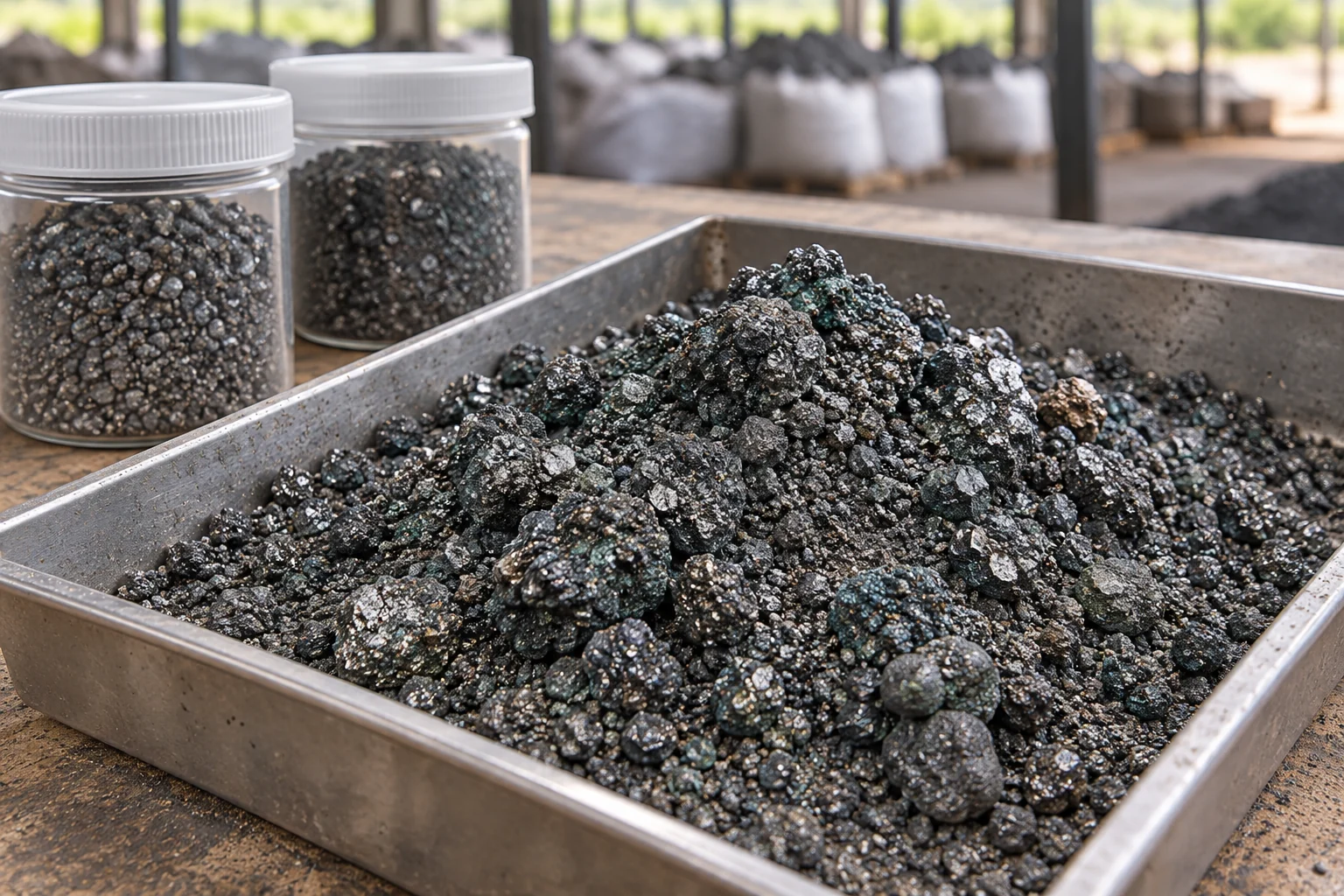
Cobalt buyers need a precise product description, reliable inspection evidence and a shipment plan that matches the receiving plant. Afroalliance Export Company Limited welcomes inquiries from companies seeking a Dar es Salaam-based mineral exporter and trader for a direct commercial discussion. Tell us what you want to purchase, how your plant will use it and where you need delivery. Those details create a stronger starting point than a request for a generic cobalt price.
Afroalliance describes regional mineral sourcing from the Democratic Republic of Congo. Shipment planning through Tanzania represents a separate part of the transaction. Establish the actual source and movement documents for the proposed lot; a Dar es Salaam dispatch discussion does not establish Tanzanian mine origin. Likewise, a product illustration or catalogue entry does not confirm a quantity in stock, a processing capability or a particular grade.
Cobalt for export: choose concentrate, intermediate or metal deliberately
Cobalt-bearing concentrate contains cobalt within a mineral feedstock and associated constituents. A hydroxide intermediate comes from a different processing stage and may contain other metals, moisture and residual constituents. Refined cobalt metal serves another purchasing requirement. The USGS Mineral Commodity Summaries provides background on industrial uses, including alloys and chemical applications. Buyers still need to qualify the specific material for their own process.
Ask Afroalliance which material form we can discuss for your inquiry. Describe the desired chemistry and physical form rather than assuming that every cobalt product suits the same market. A buyer targeting refined metal cannot apply that purity requirement directly to a concentrate or hydroxide feedstock. Treat any market reference as context until the written offer identifies the actual product, quality evidence and acceptance conditions.
Specify cobalt content and the moisture basis together
Ask the laboratory to state cobalt content, units, analytical method and whether the result refers to dry material or the material as received. Moisture changes the relationship between a shipment’s gross weight and its dry material content. Define how the parties will measure moisture and how they will use the result in commercial calculations. Do not multiply an unexplained percentage by a shipment weight and assume that the resulting metal quantity supports settlement.
Request the impurity information that your receiving plant needs. Depending on the proposed product and process, the buyer may need to review copper, nickel, iron and other constituents. Let the receiver define the relevant panel and acceptance limits. Avoid a universal impurity checklist that ignores the material’s actual composition. Ask the seller to identify the sampling date, lot reference and analytical scope so the report supports the quantity under negotiation.
Qualify cobalt hydroxide as its own processing intermediate
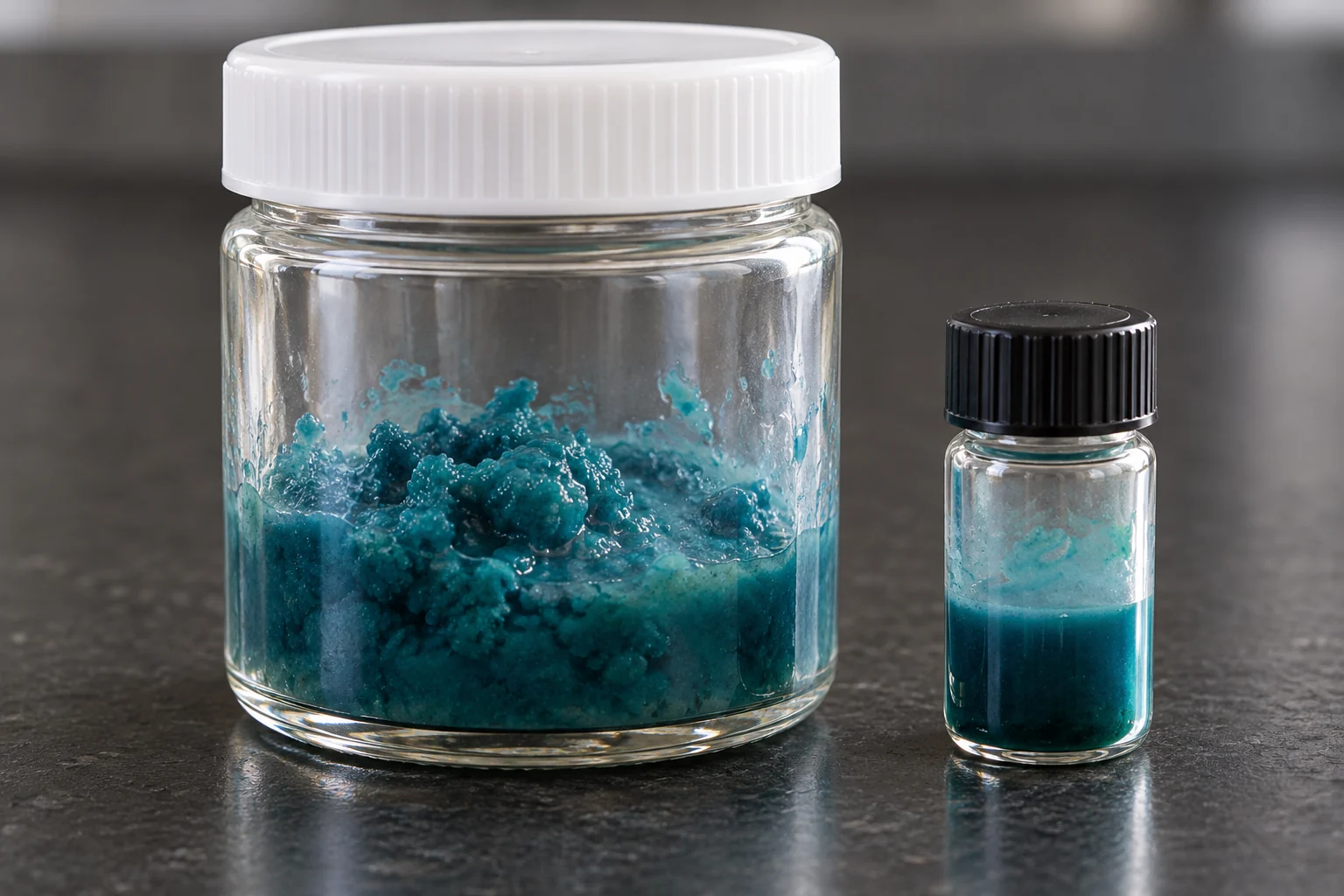
A label such as cobalt hydroxide does not describe every constituent in a commercial intermediate. Ask for the product identity, production stage, cobalt reporting basis, moisture, unwanted constituents and safety data. Mixed intermediates can differ in composition and appearance. Do not infer chemical identity, recoverability or suitability from colour. A laboratory sample image provides an educational illustration, not a certificate of analysis.
Keep the commercial description consistent across the inquiry, offer, inspection instructions and shipping documents. If the buyer needs a specific hydroxide intermediate, ask Afroalliance to confirm whether that exact form can enter the quotation discussion. Never treat a general cobalt catalogue page as a promise of intermediate production, a battery qualification or a fixed supply volume. Agree the product identity before discussing a delivery schedule.
Use inspection to connect evidence with the shipment lot
Define the proposed lot and agree how an inspector will sample it. Record the sampling location, package population, increment selection and composite preparation. Agree sealing and custody arrangements for laboratory samples and retained samples. Discuss independent inspection before material moves, rather than trying to reconstruct a sampling history after the parties disagree about a result.
Separate quantity verification from quality testing. Weight records, moisture determination and chemical analysis answer related but different questions. Ask the inspector to connect each result to the agreed lot identification. If the contract includes an umpire procedure, define the trigger, laboratory appointment and treatment of retained samples. Clear instructions help the buyer and seller resolve differences without relying on photographs, informal sample descriptions or unexplained assay screenshots.
Review source documents and the applicable Tanzania movement procedure
Request the counterparty’s legal identity, source information and the trading documents relevant to the proposed consignment. Review responsible-sourcing expectations with your own procurement team and receiving market. Match lot references across supplier records, inspection documents and transport paperwork. Treat missing or inconsistent information as a question to resolve before committing to the transaction.
The Tanzania Mining Commission’s import and re-export guidance explains that imported minerals require the appropriate process before re-export. Ask the Commission and qualified clearing professionals which approvals and supporting records apply to the actual movement. Determine whether the shipment follows an import/re-export route or a customs transit procedure. An exporter should not substitute one paperwork route for another simply because the cargo passes through Tanzania.
Prepare for sea freight through Dar es Salaam
The Tanzania Ports Authority’s Dar es Salaam gateway overview provides context for the port’s regional trading role. Buyers should turn that geographical advantage into a consignment-specific plan. Discuss inland transport, receiving arrangements, handling, documentation, booking options and destination clearance. Confirm who will coordinate each step and when the parties must provide the necessary information.
Have a competent shipper or cargo specialist determine the product’s transport classification from its actual composition and physical form. Obtain an appropriate safety data sheet and ask the carrier to review the cargo description and proposed packaging. The IMO’s solid bulk cargo information explains the framework for relevant bulk movements. Packaged cargo may follow different requirements. Do not assume that every concentrate travels under one classification or that a generic mineral name settles carrier acceptance.
Discuss moisture-related assessment where the actual cargo and shipment mode require it. Agree suitable containment, closures, package weights, markings and lifting arrangements. Ask how the handling plan will address dust, leakage, contamination and damage as relevant to the material. Let qualified personnel establish the operational controls; a commercial website cannot replace the cargo assessment, applicable rules or carrier instructions.
Agree commercial responsibilities before booking
Request a written offer that identifies product form, quantity basis, quality evidence, price basis, named delivery place and inspection arrangements. Identify who pays freight, handles clearance and arranges insurance. State the documents the buyer requires for acceptance and any agreed payment conditions. These details help both parties compare the total obligation rather than a headline price alone.
Afroalliance welcomes discussions about single lots, trial purchases and repeat procurement. We confirm grades, quantities, availability and delivery terms through quotation. Establish carrier acceptance and documentary readiness before relying on a proposed sailing date. Documented inspection and suitable packing support safer shipment preparation; neither a preliminary conversation nor a port reference guarantees permit approval, a vessel allocation or risk-free delivery.
Coordinate related battery and copper material inquiries
Nickel Concentrate for export with a defined acceptance specification
Send your nickel-content target, moisture basis and unwanted-element limits. A cobalt buyer considering nickel feedstock should still qualify the nickel lot separately. Ask Afroalliance which evidence and proposed product form can support the inquiry.
Graphite Concentrate export inquiries for processing requirements
Describe the intended application, carbon requirement and particle characteristics. Do not assume that a concentrate already meets a finished battery-material specification. Give the receiving plant’s qualification requirements before asking for a comparable commercial offer.
Copper Concentrate for export: 35–46% Cu inquiries
Afroalliance lists copper concentrate at 35–46% Cu. Request the proposed lot’s assay, moisture and relevant impurity information. Compare its quotation on the agreed analytical and weight basis rather than treating the listed range as every lot’s guaranteed result.
Copper Cathode export sales for industrial procurement
Tell us the required analysis, plate characteristics and packing expectations. Keep cathode acceptance and inspection distinct from concentrate purchasing. Ask for evidence that identifies the actual lot rather than relying on the appearance of stacked plates.
Mill-Berry Copper Wire Scrap for sale and export
Define the bare-wire requirement, sorting criteria and acceptable contamination. Discuss inspection and bundle preparation. Separate wire scrap from cathode and concentrate on purchase orders so the parties agree exactly which copper form the quotation covers.
Explore other mineral and metal export requirements
Tantalum export inquiries for concentrate and specified forms
State the intended tantalum form and whether the assay should report Ta or Ta₂O₅. Ask for mineralogy and source information appropriate to that product. Keep a tantalum requirement separate from the cobalt specification even within a combined procurement brief.
Coltan for export with clear assay and source records
Ask how the proposed coltan lot reports tantalum and niobium. Specify sampling, traceability and receiver acceptance requirements. Coordinate regional sourcing discussions while retaining separate lot records and commercial descriptions for each material.
Tin Concentrate for sale to mineral processing buyers
Provide the desired tin content, moisture basis and relevant impurity limits. Request the evidence your processor needs before negotiating the shipment. Shared sourcing conversations do not make one material’s assay representative of another.
Tin export sales with agreed physical and chemical requirements
Identify the required tin form, analysis and intended application. A metal purchase needs a different specification from a concentrate inquiry. Ask for the proposed packing and unit weights alongside the commercial offer.
Tungsten for export under a material-specific quotation
Describe the tungsten-bearing form and required reporting basis. Ask which product Afroalliance can discuss and what inspection evidence the quotation will use. Confirm the appropriate cargo assessment independently from the cobalt shipment.
Give precious materials separate inspection and freight plans
Gold doré for sale with lot-specific assay arrangements
Afroalliance lists gold doré at 23 carat and 97.87% purity. Request lot-specific analysis and refinery acceptance terms, and clarify those stated quality descriptions in the agreed documentation. Use a separate inspection and commercial process for precious-metal purchases.
Rough diamonds export sales by air freight only
Discuss parcel characteristics, inspection and applicable documentation directly with Afroalliance. Rough diamonds use air freight only. Do not include diamond parcels in the seaport shipment planning described for suitable mineral and metal cargo here.
Start a direct cobalt purchasing conversation with Afroalliance
Prepare a short buying brief with your company details, product form, target specification, quantity, destination and preferred delivery requirements. Add your moisture basis, inspection expectations, packaging constraints and receiving plant’s acceptance criteria. Explain whether you want a trial lot or a repeat-purchase discussion. Those details help us identify the questions that a useful quotation must answer.
Afroalliance welcomes buyers who want to discuss mineral trading and export preparation from Dar es Salaam. Bring clear requirements and ask for the evidence behind the proposed offering. Review the written commercial terms, verify the invoice and agree the documentary and shipment responsibilities before proceeding. A disciplined inquiry gives both parties a practical route from initial discussion to an assessed purchase proposal.
Contact Afroalliance on WhatsApp about cobalt export requirements, or call +255 767 645 184. Tell us the material form and destination so we can begin with the needs of your actual order.
Image disclosures and credits
Image disclosure: The cover and inline images are AI-generated illustrations, not photographs of Afroalliance inventory, facilities or available stock. The cover adapts mineral texture from Vassia Atanassova – Spiritia’s heterogenite photograph, CC BY-SA 3.0. The generated concentrate scene changes the material presentation and setting and carries the same image license.

AI-generated illustration of a blue cobalt(II) hydroxide sample. Colour reference: Chemicalinterest, Cobalt hydroxide, public domain. The illustration changes the container and setting. Commercial mixed hydroxide intermediates can look different; this image establishes neither composition nor an available offering.
