
A serious tantalum purchase starts with a clear material requirement and a practical route to the receiving plant. Afroalliance Export Company Limited welcomes buyers who want to discuss mineral sourcing, commercial terms and export preparation with a Dar es Salaam-based exporter and trader. Bring us your intended product form, target specification, proposed quantity and destination. We can then discuss the information and arrangements that a workable quotation needs.
Our business describes mineral sourcing from the Democratic Republic of Congo. That regional sourcing focus differs from the place of shipment: a consignment may originate outside Tanzania and move through a Tanzanian export corridor. Buyers should establish the actual origin, lawful trading chain and applicable movement procedure for each proposed lot. A Dar es Salaam shipping discussion does not establish Tanzanian mine origin or confirm that stock already sits at the port.
Tantalum for export: define the material before the price
Tantalum-bearing concentrate, tantalum oxide and refined tantalum metal represent different stages in a processing chain. A processor buying mineral feedstock needs information about mineralogy, recoverable tantalum and unwanted constituents. A specialist buying an oxide intermediate needs the compound identity and an appropriate chemical specification. A metal buyer may instead require powder, plate, bar or another precisely described form. One commercial name cannot substitute for those distinctions.
The USGS Mineral Commodity Summaries describes a material with important electronics and other industrial uses. Those applications explain why buyers set different requirements; they do not establish a particular grade in Afroalliance’s inventory. Ask us which product form we can discuss for your inquiry. Treat a requested specification as a buying target until a quotation, lot documentation and agreed inspection support it.
Read Ta and Ta₂O₅ as different reporting bases
An assay can express tantalum as elemental Ta or as tantalum pentoxide equivalent, Ta₂O₅. The numbers differ because the oxide includes oxygen. Always ask the laboratory to identify the reporting basis, units, analytical method and moisture basis. Never compare two headline percentages until both reports describe the same basis. If a commercial calculation converts one expression into another, have the laboratory or technical adviser verify the conversion and record it in the purchase specification.
For a concentrate inquiry, request separate results for tantalum and niobium where relevant, plus the constituents that matter to your receiving process. Agree acceptable limits rather than borrowing a specification from an unrelated sale advertisement. Mineralogy, particle size and treatment history can influence how a plant evaluates a feedstock even when two samples show similar headline values. Send the receiver’s requirements early so the commercial discussion addresses the material the plant actually wants.
Make sampling represent the proposed shipment
A photograph cannot establish grade, and one attractive specimen cannot represent a mixed lot. Define a sampling plan that covers the quantity under negotiation. Ask who will sample, where they will work, how they will select increments and how they will prepare representative composites. Agree sample identification, sealing, custody and retention arrangements before inspection starts. Keep the proposed shipment lot separate from material that falls outside the agreed inspection scope.
Use an independent laboratory and inspector when the transaction requires them, and agree who appoints and pays them. Specify a process for conflicting results, including an umpire laboratory if appropriate. Record the lot reference on sample labels, assay reports, weight records and commercial documents. This discipline helps both parties discuss differences with evidence instead of treating every later laboratory result as directly comparable to an earlier sample.
Understand intermediates without confusing them with concentrate
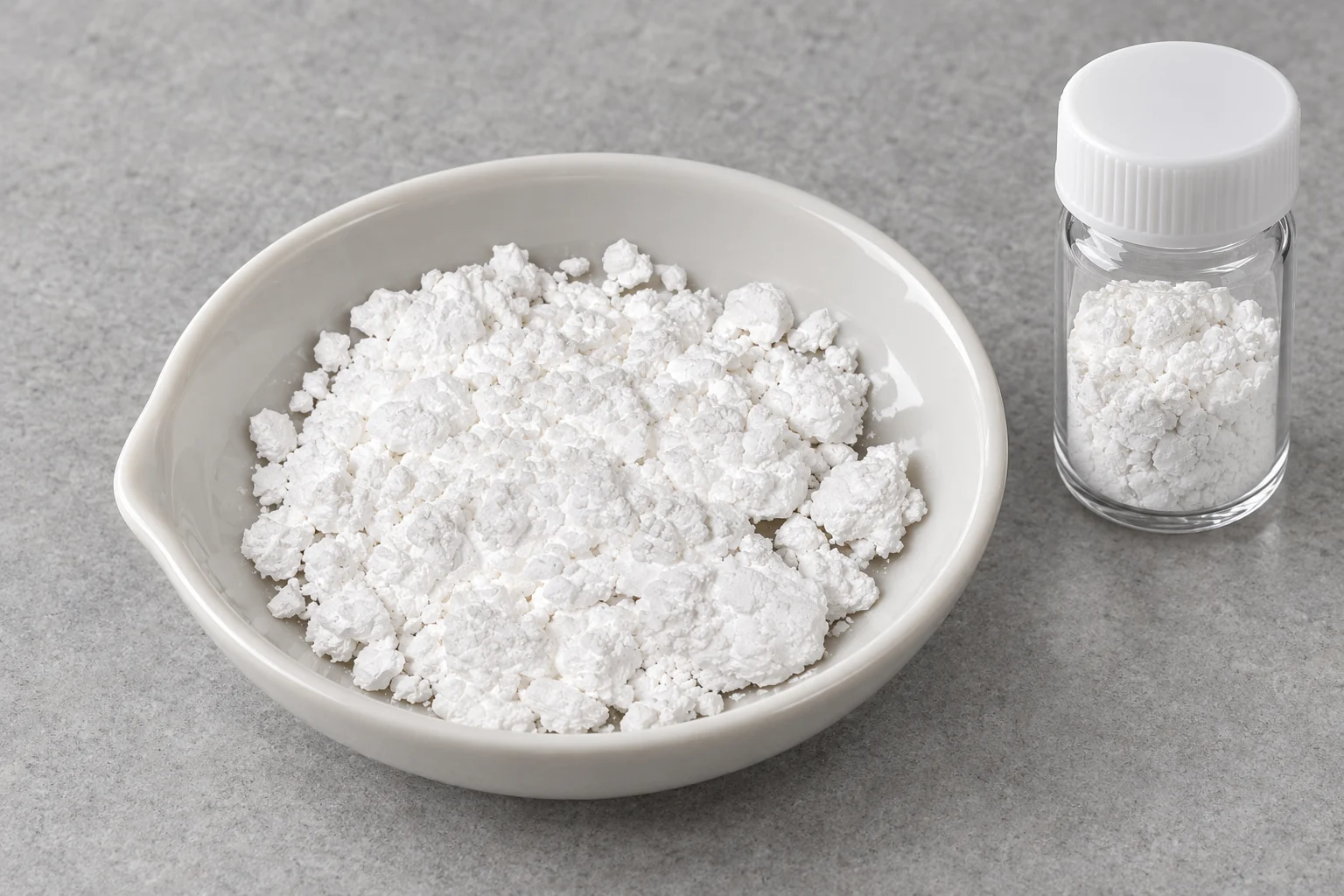
A tantalum oxide processing intermediate differs chemically and commercially from mineral concentrate. Ask for its exact identity, intended use, production stage and specification. Refined metal requires another set of form and quality requirements. Afroalliance’s catalogue provides a starting point for discussion; it does not promise every processing intermediate or refined form. Confirm the proposed offering and its supporting documents through a material-specific quotation.
Keep concentrate and intermediate offers on separate comparison sheets. Note the unit of sale, analytical basis, packaging, payable material and any agreed treatment or penalty terms. A lower quoted price may describe a different product, a different quantity basis or a different delivery obligation. Ask the seller to explain those differences in writing before you compare the commercial totals.
Build traceability into the trading documents
Ask for the seller’s legal identity, the documented source and the chain of custody relevant to the proposed material. Reconcile shipment references across supplier paperwork, inspection records and transport documents. Tantalum buyers should also establish the responsible-sourcing information their own company and destination market require. Commercial readiness includes the ability to answer those questions clearly; a generic declaration cannot replace a documented review of the actual trading chain.
Tanzania’s Mining Commission import and re-export guidance describes an import declaration process and conditions for re-exporting imported minerals. It also identifies additional international obligations for relevant mineral groups. Ask the Commission, a qualified clearing agent and your compliance advisers to confirm the procedure for the specific consignment. Determine whether the movement involves import and re-export or a customs transit arrangement; do not treat those procedures as interchangeable.
Plan packing and shipment through Dar es Salaam seaport
Dar es Salaam offers a practical place to discuss shipment planning for regional mineral trade. The Tanzania Ports Authority’s Dar es Salaam gateway information explains the port’s regional role. The route still needs a shipment-specific plan: inland transport, receiving arrangements, documentation, port handling, vessel booking and destination clearance. Ask for realistic lead times after the parties establish the cargo, required approvals and carrier options.
Choose packaging that suits the actual material, its assessed hazards and the agreed transport mode. Discuss containment, closure, package weights, lifting arrangements, markings and protection against contamination or loss. Request a suitable safety data sheet and qualified cargo assessment. For solid bulk shipment, consult the applicable IMO solid bulk cargo requirements; for packaged cargo, have the shipper and carrier determine the relevant rules. Not every concentrate has the same classification or moisture requirements.
Agree the named delivery place, responsibilities and documentary handover points in the contract. Identify who arranges insurance and what evidence the insurer requires. Confirm carrier acceptance before making a shipment commitment. Inspection, suitable packaging and documented handling support safer preparation, but neither a website article nor a preliminary inquiry guarantees a sailing date, permit approval or risk-free transport.
Coordinate related mineral export inquiries
Coltan for export: clarify the tantalum-bearing feed
Tell us whether you require coltan as mineral feedstock or a separately specified tantalum product. Request the relevant tantalum and niobium reporting bases, source documents and lot identification. Keep these requirements consistent with the receiving plant’s acceptance process.
Tin Concentrate export inquiries for processing buyers
Give the target tin content, moisture basis and impurity limits for a tin concentrate inquiry. Coordinate sampling and documentation where purchases share a regional sourcing discussion, while retaining separate assays and commercial terms for each material.
Tungsten for sale and export quotation preparation
Identify the intended tungsten-bearing form and the required reporting basis. A concentrate inquiry needs different acceptance criteria from a metal purchase. Ask Afroalliance to discuss the proposed form before comparing prices or combining shipment plans.
Tin export sales for clearly specified product forms
Describe the tin form, required analysis and intended application. Do not substitute a concentrate offer for a refined-metal requirement. Request the packing method, unit weights and inspection evidence appropriate to the product under negotiation.
Discuss copper and battery-material purchasing alongside tantalum
Cobalt for export: separate feedstock from refined metal
State whether your cobalt inquiry concerns concentrate, an intermediate or metal. Ask which form Afroalliance can quote, and provide cobalt-content, moisture and impurity requirements. A generic cobalt description does not establish suitability for a particular processing route.
Nickel Concentrate export inquiries with receiver specifications
Provide the intended receiver’s nickel, moisture and unwanted-element limits. Keep the proposed nickel lot’s analysis and cargo assessment independent from a tantalum shipment, even when one procurement team coordinates the commercial discussion.
Graphite Concentrate for export to industrial buyers
Explain your carbon-content target, particle requirements and intended processing application. Ask about the offered form and available evidence. Avoid treating every graphite concentrate as a finished battery input without the receiver’s technical qualification.
Copper Concentrate export inquiries: 35–46% Cu
Afroalliance lists copper concentrate at 35–46% Cu. Confirm the actual lot assay, moisture and agreed impurity limits in the quotation. Keep that company-listed range distinct from a generic market benchmark or a guaranteed result for every shipment.
Copper Cathode for sale and export inspection
Specify the cathode analysis, plate requirements, packing and inspection scope. Ask for the evidence that supports the proposed lot. Separate cathode purchasing from concentrate settlement because the material forms and acceptance criteria differ.
Mill-Berry Copper Wire Scrap export sales
Describe the bare-wire requirement and acceptable contamination levels. Discuss sorting, inspection and bundle preparation before agreeing shipment details. Keep wire scrap distinct from copper cathode in purchase orders, invoices and cargo descriptions.
Keep precious-material shipments on their own terms
Gold doré for sale: confirm the listed quality and assay
Afroalliance lists gold doré as 23 carat with 97.87% purity. Ask for lot-specific assay, inspection and refinery acceptance arrangements, and clarify how the parties reconcile those stated quality descriptions in the final documentation.
Rough diamonds export inquiries by air freight only
Discuss parcel characteristics, inspection and applicable documentation separately. Afroalliance specifies air freight only for rough diamonds. The seaport planning described for suitable mineral cargo in this article does not apply to diamond parcels.
Send Afroalliance a purchase brief that supports a useful quotation
Send your company details, material form, specification, proposed quantity, destination and preferred delivery requirements. Include the analytical basis, inspection expectations and document checklist. State whether you want a trial lot, a single shipment or a repeat-purchase discussion. Share your receiving plant’s constraints before the parties choose packing or freight arrangements.
Afroalliance welcomes direct buyer conversations about mineral trading and export preparation from Dar es Salaam. We discuss quantities, grades, availability, inspection, packing and shipment terms through quotation. Review the written offer, verify the commercial documents and agree the responsibilities before payment or dispatch. Ask practical questions early: clear requirements let both parties identify what they need to confirm before moving forward.
Contact Afroalliance on WhatsApp about tantalum export requirements, or call +255 767 645 184. Include your target material form and destination so the conversation starts with your actual purchasing needs.
Image disclosures and credits
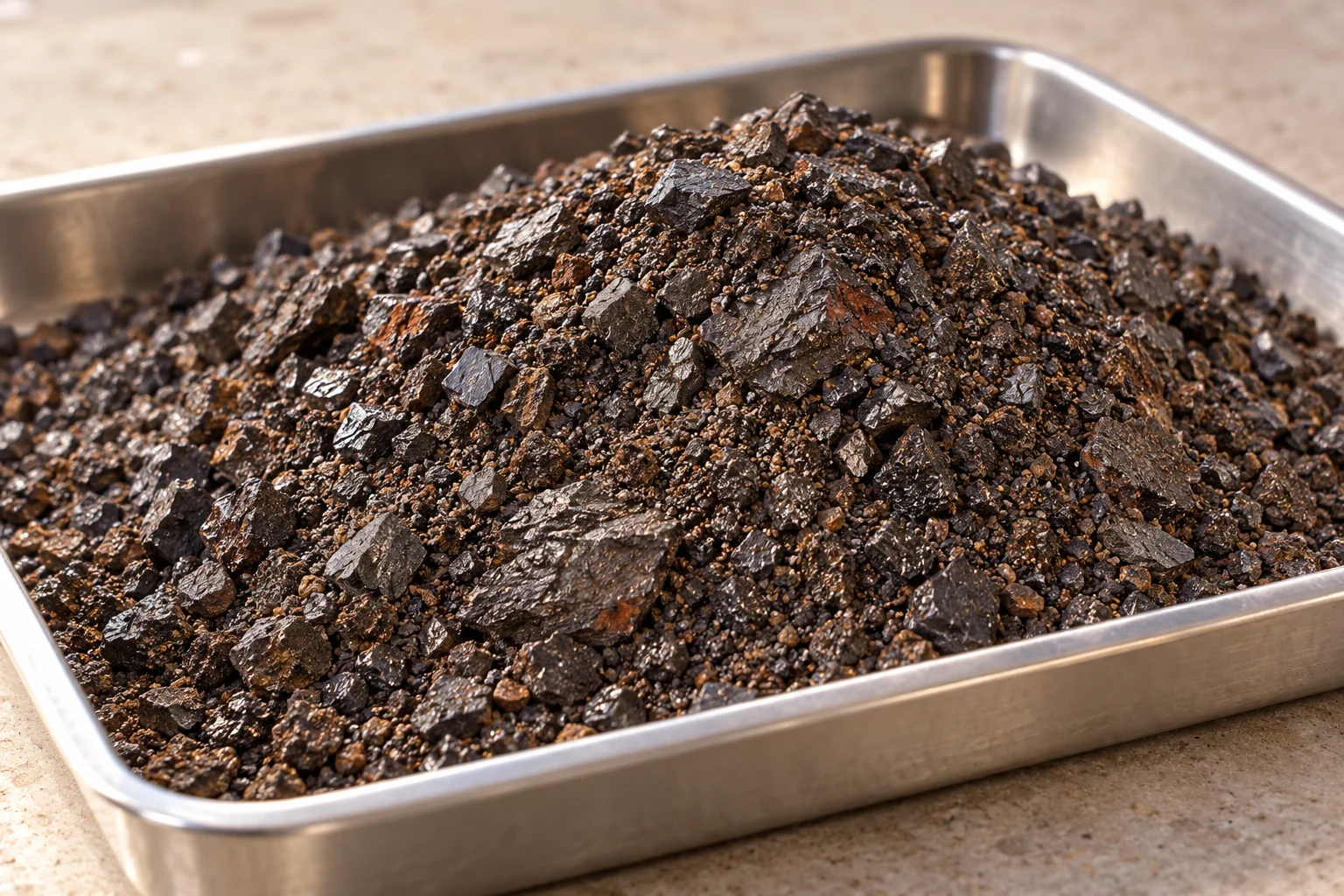
Image disclosure: The cover and inline material images in this article are AI-generated illustrations, not photographs of Afroalliance inventory, facilities or available stock. The cover uses Andrew Silver’s public-domain USGS tantalite photograph as a mineral-texture reference; the generated scene changes its form and setting.

AI-generated illustration of a tantalum(V) oxide processing intermediate. Material appearance reference: Leiem, Tantalum(V) oxide sample, CC BY-SA 4.0. The illustration changes the composition and setting and carries the same image license. Neither the image nor its colour establishes purity or availability.
